

What becomes possible when your leaders learn to see and lead differently?
The way your leaders think and show up shapes your organisation more than any structure or strategy. When that shifts — everything shifts.
Does any of this sound familiar?
Leadership Demands
- Your leaders are increasingly tested by complexity and it is beginning to show in how they decide, lead and hold up under pressure.
- Results across teams are uneven and the underlying challenge is more human than organisational.
Transition
- A high-potential leader has stepped into a larger role and is still finding their footing at that level.
- Organisational change is moving faster than your leaders can absorb and the gap is beginning to show in the business.
Constraints
- Senior leaders rarely speak freely internally — for fear of being judged or seen as uncertain in a role they’re expected to own.
- You can see what a key leader needs — but no internal mechanism can create the space for that conversation to happen.
Leadership
• The time and space to think through critical decisions is rarely there. • The higher you lead, the fewer people you can confide in. • Knowing where to focus your energy is harder than it should be. • You've built something real and still you wonder if you have what it takes for what comes next.
Transition
• Something needs to change. You can't name it yet and the path forward isn't visible. • You want to navigate your new larger role with confidence and intention. • You are at a crossroads and want to know what you truly want on the other side.
Alignment
• From the outside everything looks like it's working. From the inside something feels quietly off. • The way you’re spending your time and energy doesn't reflect what actually matters to you. • You sense you're capable of more but the frustration of not knowing where or how to begin is real.

- When this engagement is the right fit
- The leader is genuinely willing to reflect on what has shaped how they think and lead.
- There is sufficient trust between the sponsor and the leader for the engagement to feel safe and not monitored.
- The organisation is ready to invest in this leader’s development — beyond the immediate moment.
- This engagement may not be the right fit when
- The leader isn’t yet ready — readiness cannot be created from the outside.
- The engagement is being positioned to serve the organisation’s agenda rather than the leader’s genuine development.
- The timing simply isn’t right. If that moment hasn’t arrived yet, it will.
This is for you if
- You are an entrepreneur or professional leading at a level where the choices you make carry real consequence - and where genuine thinking time is rare.
- You are stepping into a new phase - of responsibility, growth, or impact, and want to navigate it with intention rather than instinct alone.
- You are in the middle of a transition — professional, personal, or both — and want to move through it with greater awareness of what you truly want on the other side
- You value a confidential, non-judgmental space - one where you can think honestly, without performance and without being told what to do
- You are willing to look honestly at how you think, decide, and lead — and take ownership of what that reflection reveals
- You are ready to engage with depth - with what needs to change, and with who you are in the process of becoming.
This may not be for you if
- You are looking for advice, frameworks or immediate solutions
- You want to be directed rather than supported in finding your own way forward
- You are not yet ready to examine the patterns and perspectives that have shaped how you think and lead
- The timing isn’t right. This work requires genuine engagement -a willingness to stay with what surfaces.
A structured partnership. A tailored process.
Every engagement is shaped around the organisation's goals and the leader's context. The process is consistent — the work is entirely tailored.
Discovery
We begin with a conversation - open and without obligation. A space to explore what's present for you - and whether this partnership feels right.
A conversation with the relevant stakeholder to understand the context, the leader, and what success looks like for the organisation.
A joint session with the leader and the sponsor establishes shared expectations, direction and what the engagement is designed to support.
Bi-weekly sessions of around 60 minutes over a minimum of 6 months - shaped by the leader’s context and the organisation’s priorities.
Structured check-ins with the sponsor and the leader to ensure that the work remains connected to both the leader’s development and the outcomes the organisation needs to see.
A minimum of nine- twelve sessions over six months allows the work to start to take root - and for what shifts to hold.
Foundation
We establish what matters most - your context, your priorities and what you want this work to support and move forward.
The Work
Bi-weekly sessions of around 60 minutes — shaped by where your thinking needs to go. Through reflection and focused dialogue, thinking begins to clear and direction starts to take shape.
Integration
Between sessions, the work continues. Insights compound. Shifts begin to show up in how you lead and decide.
Moving Forward
A minimum of six sessions over three months allows the work to start to take root - and for what shifts to hold.

When leaders begin to see differently, organisations feel it
Executive coaching is a strategic investment — in the people your organisation depends on most.
Clearer thinking
The mental noise, the loops, the competing voices, the sense of overwhelm — begin to settle. Patterns surface, assumptions become visible and what felt scattered starts to feel navigable.
Decisions that feel more grounded
The second-guessing begins to ease.
You develop a more honest relationship with your own thinking and start to trust what you know.
A stronger sense of direction
Priorities begin to find their place. The reactive pull of what feels urgent starts to loosen its grip.
You move forward with more focus – toward what actually matters on terms that feel genuinely yours.
Leadership that others can feel
The steadiness that develops in this work is visible— a quality of presence rather than performance. The people around you begin to experience you differently.
Movement that holds
The shifts that come from this work tend to last — because they come from a more honest place within you. When you begin to see yourself and what’s possible differently, that change becomes the new ground.
Grounded Conviction
A leader develops the courage to speak up, stand by their decisions and lead from their own judgement.
Sharper Decisions
Arrived at from a place of genuine discernment, with greater consideration and clarity.
Steadier Presence
Leaders show up with greater steadiness in moments of change and pressure. People around them begin to experience that.
Ripple Effect
One leader's shift ripples outward into their team, their decisions and the broader culture. The impact is felt far beyond the individual.
Faster Transitions
Leaders stepping into larger roles find their footing more effectively — taking ownership earlier and operating with greater confidence at the next level.
Don't take my word for it
Here's what the people I have worked with have to say.
I approached Sonam to help build my confidence with authority. I knew my point of view but it sat behind anxiety I couldn't always control. What shifted was where my attention went. I stopped managing how others would react and started trusting my own perspective. I found I could simply hold my ground - clearly, without retreating. Working with Sonam created the space for a genuine shift in perspective. That steadiness is what I carry forward.

Anupam Dasgupta
Head - Grassroots Sports, Round Glass Foundation
From one coach to another, Sonam's coaching style is insightful, patient, and deeply engaging. She creates a safe and open environment where one can explore thoughts without hesitation. What stands out most is her ability to gently challenge perspectives and bring clarity to complex situations. She holds the space with great presence, enabling a meaningful inward journey — which truly reflects her commitment to her clients' growth.
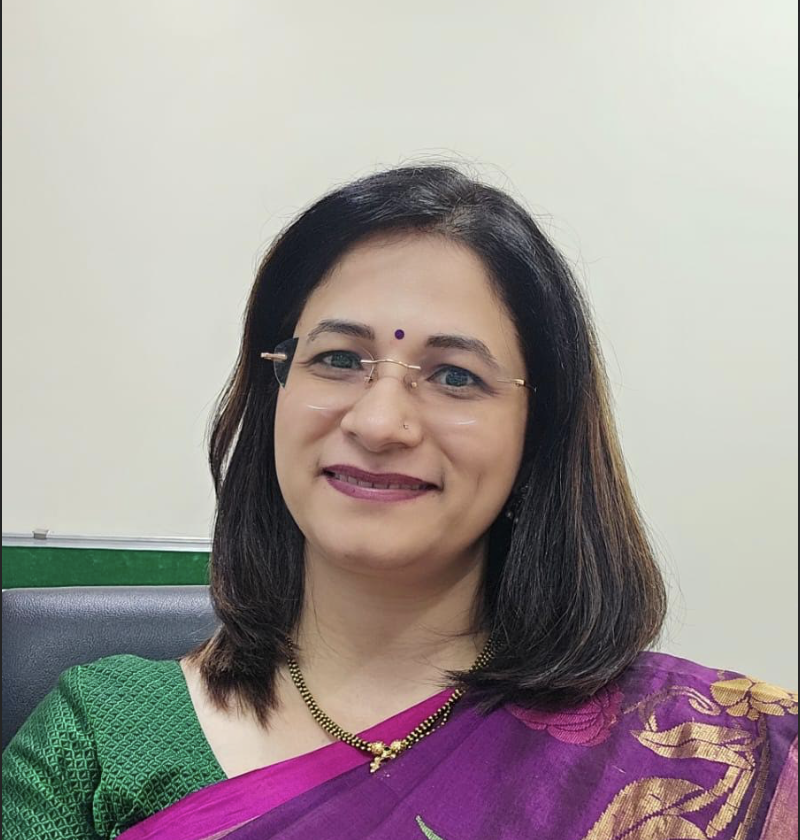
Molina Gurjar
Deputy General Manager, Head Retail Credit, DNS Bank
Have a question?
The return on an executive coaching engagement is broader than what a financial measure alone can capture. At EMERGE, we work with the sponsor and the leader at the outset to define what a successful engagement looks like — across both measurable outcomes and the shifts that show up in how the leader thinks, decides and leads day to day. Greater steadiness under pressure, more considered decision-making, stronger team alignment, faster transition into a new role — these are the kinds of returns that matter most. Defining them clearly at the start is what makes them visible at the end.
We begin by working with the sponsor and the leader together to define what success looks like — what goals the engagement is designed to support and how progress will be tracked. The goals and the method of tracking are decided by the sponsor and the leader. Some outcomes lend themselves to quantitative tracking — specific behavioural shifts, performance indicators, stakeholder feedback. Others are better assessed through honest conversation about what has visibly changed. A combination of both is often most useful. What matters is that the picture of progress is shared, agreed upon at the start and revisited honestly at structured intervals.
The most important contribution the organisation makes is at the beginning — helping to identify the leader's primary development goals and providing honest context about what the role requires and what success looks like. Where useful, short conversations with a small number of stakeholders can offer a broader perspective on the leader's strengths and development areas. A structured mid-point check-in allows the sponsor and the leader to review progress together. At the close of the engagement, a final conversation captures what has shifted and what the leader will carry forward. The organisation's role is to create the conditions — the coaching does the rest.
Coaching sessions at EMERGE are conducted in accordance with the ICF Code of Ethics — which means the content of sessions is held in confidence between the coach and the leader. Session content may only be shared with a sponsor or relevant stakeholder at the explicit request of the leader. This is the foundation that makes honest, open coaching possible.
The sponsor — typically an HR lead, direct manager or senior stakeholder — is involved at the start of the engagement to establish shared direction, context and goals. At structured intervals, the sponsor and the leader come together with the coach to review how the work is progressing. Between those check-ins, the coaching is between the coach and the leader.
A minimum of six months for an organisational engagement. At the start, we meet more frequently — with the sponsor and the leader together — to establish goals, set direction and ensure all stakeholders are aligned. Once the engagement is underway, sessions with the leader are bi-weekly, each around 60 minutes. Between sessions, we stay in touch as needed — particularly in the early stages of the work or during significant moments in the leader's context.
A leadership programme typically delivers a shared curriculum to a group — and may include elements of mentoring, structured frameworks or prescribed solutions. Coaching is different in both form and intent. It is built entirely around one leader, their specific context and what their development genuinely requires at this moment. There are no frameworks to follow, no advice to implement and no solutions prescribed. The work stays with the leader's own thinking — helping them see more clearly and move forward on their own terms. The two serve different purposes. When depth and individual attention are what the moment requires, coaching is the right instrument.
The most important investment you make in your organisation
is in the people who lead it.
If you are considering this work for a leader in your organisation — this is where that conversation begins. No obligation. Just an honest exchange to understand your context and whether this is the right fit.